





















Guide · Trading Cards · 13 minute read
Inserts, Short Prints & Case Hits
Part 2 of 3 Parallels, Inserts & Numbering
Published
Part 1 of this series covered the base set and the versions of its cards. This guide is about the cards that sit outside it: inserts with their own designs, short prints that are made in smaller numbers, and case hits packed so sparingly that most boxes don't contain one. You'll learn what each term means, how makers tell you how rare they are, and how to work out which one you have.
What you'll learn
- What makes a card an insert, and how it differs from a parallel or a subset
- What SP and SSP mean, and the marks that give a short print away
- What "one per case" really means for a single box
- How to read pack odds and box guarantees on a checklist
What an insert is
Topps defines insert cards as "any non-base and non-parallel cards" in a set. An insert isn't a version of a base card: it's a card in its own right, usually part of a small themed set with its own name and design, and often its own number code.
You'll also hear collectors call cards hits and chase cards. These are hobby words, not categories on a checklist. A hit is a desirable pull, such as an autograph, a memorabilia card or a notable insert; Topps' own glossary calls it a modern hobby term. A chase card is one collectors particularly hope to pull from a set. Neither is a formal rarity level, and a chase card can be any of the types in this guide and Part 1: an insert, a parallel, a short print or a case hit.
2025/26 Topps Premier League shows how this works. Alongside the base cards, its packs hold several insert sets, each with its own theme. Three of them:


Three inserts from 2025/26 Topps Premier League, photographed by VaultifyUK. Tap a card to see it full size.
Insert or subset?
Look at the numbers above. The Chrome King has a code of its own, CK14, but the Retro Threads card is #381 and the Pro Partnership is #372: they carry plain numbers on the same checklist as the base cards. Topps still calls both of them inserts.
A subset is a themed group of cards inside a set's own numbering, and the line between a subset and an insert isn't always neat. Pokémon's Celebrations expansion (2021) is a trading card game example: alongside its own cards, it has a subset called the Classic Collection, 25 remakes of famous cards from the game's history, shown in the next section. The maker's checklist is the place to check what a group of cards is called. Collectors usually build inserts and subsets as sets of their own, separate from the base set.
Inserts have parallels too
An insert can come in its own colours and finishes, exactly as a base card does in Part 1. The Chrome King set has Gemstone parallels found only in tins: Emerald, which is unnumbered, then Diamond /25, Black Diamond /10 and Ruby /5. Some inserts are only found in one kind of box. Black Edge cards, printed on black card stock, come in Topps Premier League hobby boxes, in a 3-card packet in each box, and have numbered colours of their own.


Photographed by VaultifyUK. The serial number on the Henry card counts copies; Part 3 of this series explains serial numbering.
Inserts in trading card games
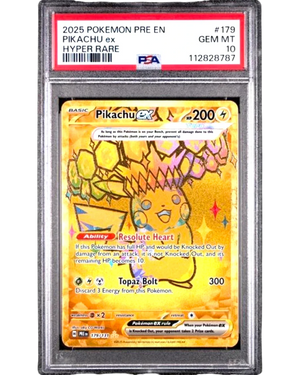
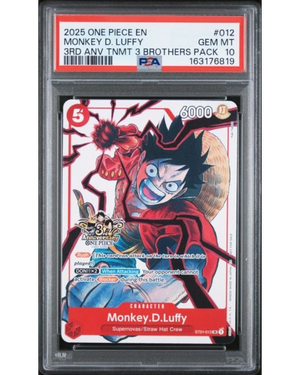
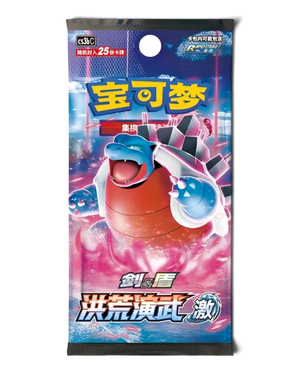
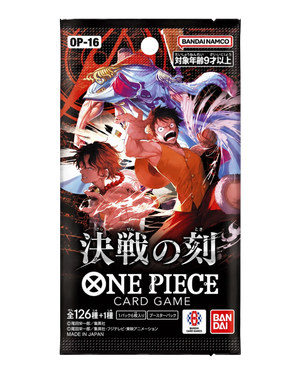
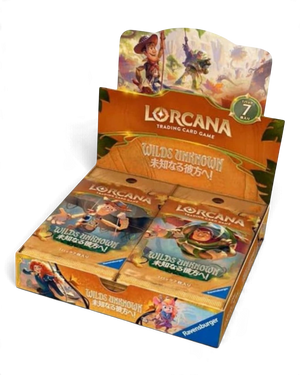
Trading card games rarely use the word insert, but many of them put cards from outside the main set into their packs. The names differ from game to game:


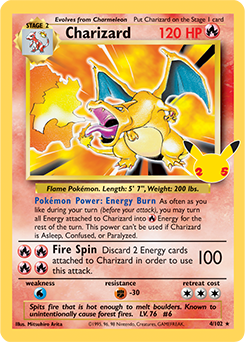
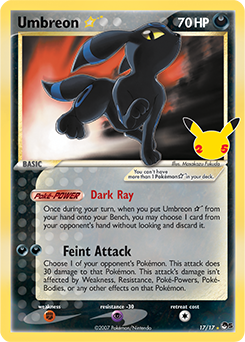


Card images: © Wizards of the Coast; © Eiichiro Oda/Shueisha, Toei Animation, Bandai; © The Pokémon Company International.
In a trading card game, a card from a bonus sheet or a special subset plays by its own rules text, and where it's allowed in tournaments is set by the game's own rules, not by how rare it is. Wizards of the Coast, for example, allows Breaking News cards in Outlaws of Thunder Junction draft and sealed games and in the formats where each card was already legal.
Each game also names its special rarities, and it helps to know which names come from the maker:
- Pokémon
- Illustration Rare (one gold star) and Special Illustration Rare (two gold stars) are official rarities, shown by the symbol on the card. "Alternate art" and "chase card" are collectors' words for them.
- One Piece
- Bandai prints a rarity code on each card, such as SR or SEC (Secret Rare). "Manga Rare" is the collectors' name for parallels drawn like the manga's comic panels; it isn't a name Bandai uses.
- Yu-Gi-Oh!
- Starlight Rare first turned up in Rising Rampage (2019) without being announced: Konami's breakdown of the set before release didn't mention it.
- Disney Lorcana
- Ravensburger says the Epic cards it added with Fabled (2025) appear more often than Enchanted cards, while Iconic cards are extremely rare. Each set has only two different Iconic cards: that counts designs, not how many copies are packed.
These names aren't interchangeable. A sports-card insert, a Pokémon SIR, a One Piece Manga Rare and a Lorcana Enchanted card may all be the card collectors hope to find in a set, but each game has its own rarity system. A named rarity also doesn't make a card a short print, super short print or case hit in the sports-card sense: those describe how a card is packed in a particular product. The maker's own odds or packing information is the most reliable evidence of that where it's published; otherwise, treat collectors' and retailers' figures as estimates.
Short prints and super short prints
A short print, or SP, is in Topps' words "a card that is printed in lower quantities than other cards in the same set". A super short print, or SSP, is scarcer again. Some sets add an ultra short print tier above that.
The important thing about most short prints is that they aren't serial numbered. Nothing on the card says how many were made, so a short print can look like an ordinary card. Makers usually give the odds of finding one instead, and they mark it in other ways, which is why short prints are easy to miss.
Topps baseball's Golden Mirror cards, mentioned in Part 1, are the clearest current example. In 2025 Topps Series 1, every one of the 350 base cards has a Golden Mirror image variation, and Topps describes them as super short prints with an extremely limited print run. They are easier to spot than most:
- The photo on the front is different from the base card.
- The back has golden artwork and a gold-foil "SSP" stamp.
Topps introduced Golden Mirror cards in 2023 Series 1. Here is one from that first year beside the base card with the same number:


Card images courtesy of Topps. Tap a card to see it full size.
Older short prints are harder. In Topps baseball before Golden Mirror, the only sign could be a code in the small print at the bottom of the back. In 2021 Topps Series 2, for example, base cards end in 423, SPs in 441 and SSPs in 442. If a card looks like a base card but the photo is different, check the set's checklist for a variation, then look for these marks.
The 2021 codes are from Beckett's guide to that set's variations.
Case hits
A hobby box is sold mainly through specialist card shops and hobby dealers, while retail boxes go to supermarkets and high-street stores. Hobby boxes often hold cards you won't find in retail packs: Topps' Black Edge inserts, for example, come only in 2025/26 Topps Premier League hobby boxes.


Box images courtesy of Topps and Panini America.
Hobby boxes are shipped to shops in sealed cases. A 2025/26 Topps Premier League hobby case, for example, holds 12 boxes of 8 packs. A case hit is a card the maker packs so sparingly that a case is expected to hold about one: Topps' glossary describes it as a special card inserted "one per case". How often a particular case hit really turns up varies from product to product, as the examples below show.
So one per case means, on average, about one box in 12 has one, and most single boxes don't. Some cards are scarcer still. In 2024/25 Topps Chrome UEFA Club Competitions, Topps calls TIFO "a case-hit insert in Hobby", and says the Circle of Power Shockwave cards appear roughly once every two cases.

Panini has famous case hits of its own. Its 2019-20 Prizm Premier League hobby box guide says the illustrated Kaboom! inserts, making their Premier League debut that year, fall about one per case on average, and that Color Blast, with custom artwork for each player, appears about once in every ten cases.


Card images courtesy of Panini America. Tap a card to see it full size.
Panini's guide lists both for hobby boxes, and retailers list them as hobby-only. That's common: many case hits are only packed in hobby boxes, so retail packs of the same set won't contain them.
A case hit is about how a card is packed, not a promise of what it's worth. Some case-hit designs have been printed for many players and in many sets, and what one is worth still depends on the player or character and how many collectors want it.
How to read odds and box guarantees
Makers describe how rare a card is in two ways, and it helps to know the difference.
The same card can have different odds in different products, so check the odds for the exact box or pack type. Common inserts can turn up in nearly every pack: Topps describes two common inserts and one uncommon insert per pack of 2025/26 Topps Premier League. An insert isn't automatically rare, and a short print can be harder to find than an insert.
Odds for an insert set cover the whole set, not one player. Say an insert set has 20 different cards and its odds are 1 in 10 packs: that's how often you'd find any one of the 20. If all 20 were packed in equal numbers and spread evenly, a particular card would turn up about once in 200 packs (10 × 20). That's only an illustration. Makers don't say that every card in an insert set is packed in equal numbers, so treat it as a rough guide, not a figure for your card.
Many makers publish a set's checklist when it's released, and some publish odds too, but not every maker does this for every product. Where a maker doesn't give odds, collectors and retailers estimate them from what's been opened; treat those as estimates.
One set, different packs
The same set can come in more than one kind of booster, and they aren't filled the same way. Magic: The Gathering's Outlaws of Thunder Junction (2024) is a clear example:
 Play Booster
For players
Made for draft and sealed games. A regular mix of cards, with at least one foil in every pack.
 #0108 · Standard
Found in Play Boosters.
 #0328 · Extended art
Collector Booster only
 Collector Booster
For collectors
More foils, rares and special versions. Wizards says extended art is unique to these packs.
So the type of pack can matter as much as the set name. Before chasing a particular version of a card, check which products can contain it: Wizards publishes a "Collecting" article for its Magic sets that lists what every booster holds.
How to work out which card you have
- Read the number.A letter code such as CK, BE or SE usually means an insert set. A plain number can still be an insert or subset, such as Retro Threads #381.
- Turn it over.Insert backs often name the insert set. Look for stamps such as Golden Mirror's gold "SSP", or a code in the small print.
- Compare it with the base card.Same number but a different photo? Check the checklist for an image variation, which may be a short print.
- Check the checklist.The maker's official checklist names every insert set, parallel and variation, and the odds sheet says how often each is packed.
- Note where it came from.Some inserts and parallels are only found in hobby boxes, tins or other box types, and the checklist will say so.
- Write it out in full.Set, insert name, number and player, for example "Topps Premier League 2025/26 Chrome King #CK14 Sergio Agüero".
Not every version is on the checklist on release day. Some image variations and other special versions only come to light after a set is out, and makers sometimes update their checklists later. If your card doesn't match the list, compare its image and number with the base card, check the maker's latest checklist, and use reputable collector references, such as Beckett's variation guides, where the official information is incomplete.
Inserts, short prints and case hits FAQ
Is every insert card rare?
What does SSP mean on a card?
Can a short print also be a case hit?
Will I find a case hit in a single box?
Do I need inserts to complete a set?
Next in the series: Part 3, Serial Numbering, Print Runs & Rainbows, explains numbered cards like 07/25 and 1/1. See every part on the Parallels, Inserts & Numbering page.