
















Tool · Collectables · 8 min read
Model Scale Guide
Explore all 16 model scales, compare their sizes visually and see how scale affects what you collect and how you display it.
Understanding Model Scales
A model scale is a ratio between a model and the original subject it represents. At 1:18, every 1 cm on the model stands for 18 cm in real-world size, so the model is 18 times smaller in length, width and height.
The same ratio works for anything made to scale. A 1.8 m person at 1:12 becomes a figure 15 cm tall, and a 4.5 m car at 1:18 becomes a model about 25 cm long.
That is why a bigger number after the colon means a smaller model: a 1:18 model is much larger than a 1:64 one. Scale shapes how much detail you can appreciate, how much shelf space a model needs and how it sits beside the rest of your collection.
Compare Model Scales
Drag the two handles to compare any two scales, or start from a common comparison.

At the same full-size reference length, the 1:18 model is approximately 3.56 times as long as the 1:64 model.
All 16 Model Scales
Every scale we work with, from full size to 1:64, with the approximate model length for the full-size reference length chosen above (4.5 m by default).
| Scale | Approx. length | Good to know |
|---|---|---|
| 1:1 | 450.0 cm (177.2 in) | Full size. The original subject at its real-world size, not a reduction. Props and replicas are often made at this size. |
| 1:2 | 225.0 cm (88.6 in) | Half the real-world size. Very large, and uncommon outside props and display pieces. |
| 1:3 | 150.0 cm (59.1 in) | A third of the real-world size. Very large and rare, mostly props and statues. |
| 1:4 | 112.5 cm (44.3 in) | A quarter of the real-world size. Large statues, busts and display figures. |
| 1:6 | 75.0 cm (29.5 in) | Often called sixth scale. Widely used for large action figures, around 30 cm for a person-sized subject, and seldom for vehicles. |
| 1:7 | 64.3 cm (25.3 in) | Uncommon. Check the stated dimensions of any 1:7 product. |
| 1:8 | 56.3 cm (22.1 in) | Large, detailed display pieces, found in some premium kits, statues and vehicles. |
| 1:10 | 45.0 cm (17.7 in) | A sizeable display scale used by some premium figures, statues and vehicles. |
| 1:12 | 37.5 cm (14.8 in) | Very common for collectable figures, around 15 cm for a person-sized subject, and for large premium vehicles and motorcycles. |
| 1:16 | 28.1 cm (11.1 in) | Used for larger model kits, building sets and military vehicles. Less common for cars. |
| 1:18 | 25.0 cm (9.8 in) | A long-established die-cast scale, also used for smaller action figures. Big enough for fine detail yet manageable on a shelf. |
| 1:24 | 18.8 cm (7.4 in) | Popular for model kits and some die-cast cars. Smaller than 1:18, still detailed. |
| 1:32 | 14.1 cm (5.5 in) | Used for some farm vehicles, slot cars and collector ranges. |
| 1:43 | 10.5 cm (4.1 in) | A traditional collector scale, compact enough for large collections. |
| 1:50 | 9.0 cm (3.5 in) | Common for construction machinery, buses and some emergency vehicles. |
| 1:64 | 7.0 cm (2.8 in) | Small, collectable and easy to display in numbers, and the size most associated with Hot Wheels-style cars (their castings vary). |
Choosing the Right Scale
There is no best scale, only the one that suits your space and what you enjoy collecting. These are general considerations, not guarantees of detail or quality.
Larger scales
Chosen for display presence and the room they give a maker to include detail, and common for statues and collectable figures. They need more space, so plan your shelf or cabinet first.
Mid-range scales
A balance of presence and practicality. 1:18 is the classic die-cast example and is also used for smaller figures, large enough to appreciate and still manageable in a collection.
Smaller scales
Ideal for building a large collection or a themed display in limited space. Individual models are small, so details are smaller to appreciate.
If you collect a series, matching the scale usually gives the most coherent shelf. Mixing scales can still work when you group models by subject or by size.
Display and Storage Considerations
A model's scale tells you its proportions, not its exact size. To plan space, divide the original subject's real-world length or height by the scale: a 4.5 m car at 1:43 is about 10.5 cm long, and a 1.8 m person at 1:6 is a figure 30 cm tall.
Leave extra room. Wings and mirrors on vehicles, and weapons, effects pieces, accessories and stands on figures, can add to the stated length or height, and a display case needs space for its walls and base. Packaging boxes are usually larger than the model inside them.
Before buying a fitted display case, compare the manufacturer's stated model dimensions with the case's internal measurements, including any stand or accessories you plan to display. Two models of the same scale can differ in size if the original subjects differ.
Scale Across Collectables
Scale is not just for model cars. The same ratio idea runs across the collectables VaultifyUK sells, although each category tends to use it differently.
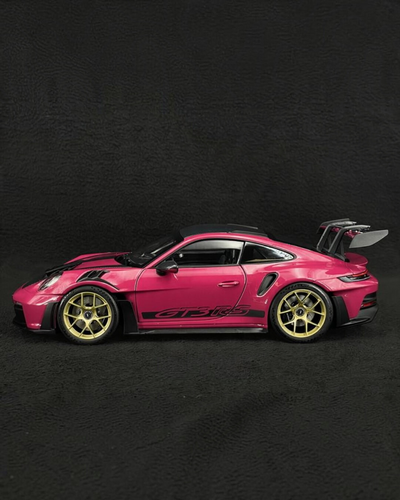
Vehicles. Usually a strict ratio, most often between 1:18 and 1:64 for die-cast, with larger and smaller sizes for kits and specialist models.
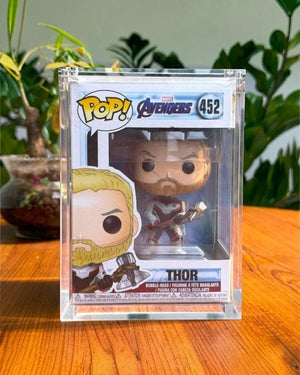
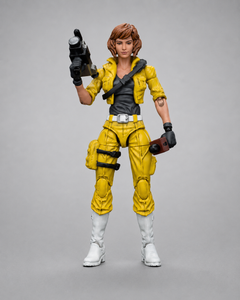
Action figures. Often 1:12, 1:10 or 1:6, but also commonly sold by approximate height, such as a "7-inch figure". The same maths applies, so check the stated dimensions.
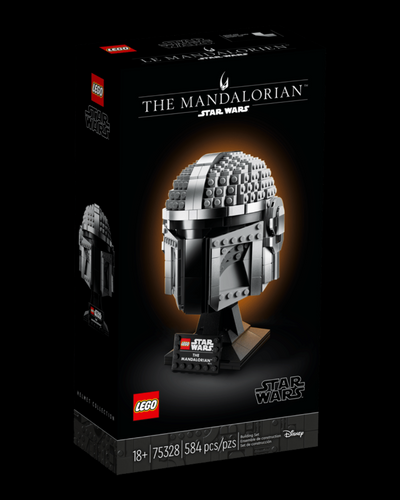
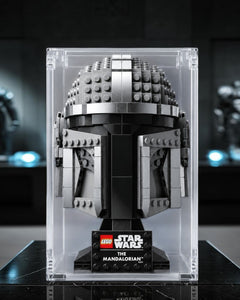
Statues and busts. Often between 1:4 and 1:8. These can be large, so check the height and base size before you plan a shelf.
Miniatures and props. Tabletop miniatures are usually described by the figure's height (28 mm, for example) rather than a ratio, while props and replicas are often 1:1.
Vinyl figures and blind boxes. Usually sold by range and approximate height rather than a stated scale.
Products sold at the same scale can still differ in physical size, so rely on the stated dimensions when size matters.
Find your scale
Browse VaultifyUK collectables across the scales in this guide, from large 1:12 figures and 1:18 display pieces to compact 1:64 collectables.